
More Cheer, Fewer Headaches: Supporting Your Nervous System Through the Holidays
Holiday headaches hitting a little too hard this year? 🎄😵💫
This is supposed to be the season of twinkle lights, cozy moments, and memories that feel soft around the edges. But for a lot of people, it’s also the season when headaches decide to join the party—right when the calendar is the fullest and your nervous system is the most tapped out.
If you find yourself thinking, “Why do my headaches always get worse around the holidays?” you’re not imagining it. Let’s talk about why it happens, what your nervous system has to do with it, and some simple steps you can take to feel more like yourself again.
Why headaches show up more during the holidays
The holidays are a perfect storm of extra inputs:
Travel and long car rides
Late nights and early mornings
Extra sugar, alcohol, and “holiday food”
More screen time (shopping, emails, kids’ schedules, end-of-year everything)
Family stress and emotional load
Trying to do “all the things” for everyone else
Individually, these things might not feel like a big deal. But together, they layer onto your nervous system like bricks in a backpack.
When your nervous system is carrying too much, it often doesn’t shout—it whispers through your body:
tight neck and shoulders
tension behind the eyes
sensitivity to light and noise
headaches that come on quicker and stay longer
You don’t have to be in a full-blown migraine to be affected. Even “just a little tension headache” can steal joy from your day when you’re already stretched thin.
Your nervous system: the hidden player behind holiday headaches
Your nervous system is your body’s command center. It helps you:
respond to stress
regulate muscles and blood vessels
process light, sound, and movement
shift between “go mode” and “rest mode”
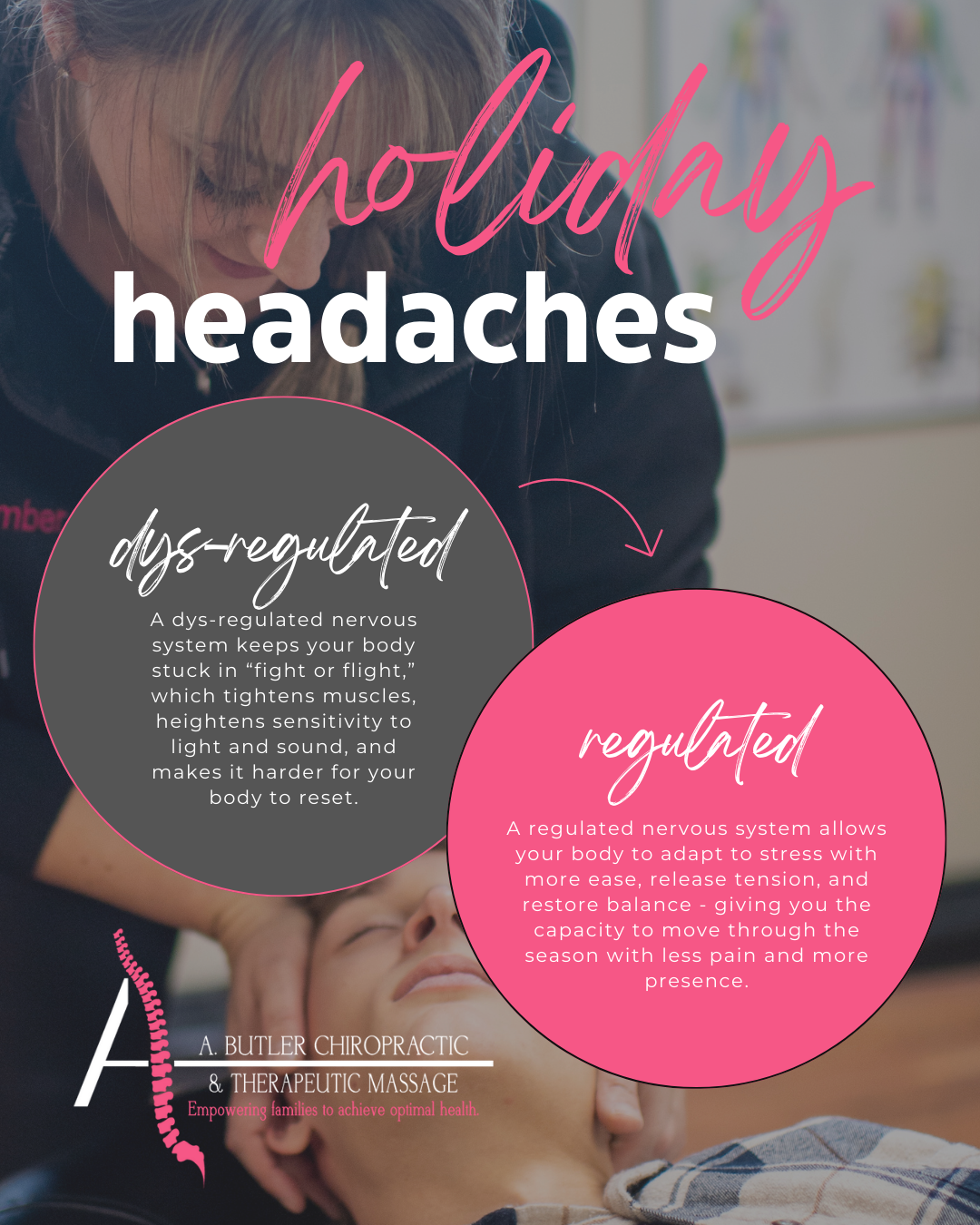
When you’re in fight or flight (which can happen simply from being overscheduled, under-rested, and overstimulated), your body shifts into protection mode. Muscles tighten, blood flow patterns change, and your system becomes more sensitive overall.
This can show up as:
jaw clenching
shoulder/neck tightness
shallow breathing
poor sleep
and yes… headaches
When this becomes your default state, your body doesn’t fully reset between stressors. So that “small headache” on Monday turns into a bigger one by Thursday, and by the weekend you’re wondering why you’re so wiped out.
What regulation feels like (and why it matters)
On the flip side, when your nervous system is more regulated, your body has more capacity to handle stress without spiraling into symptoms.
Regulation can look like:
muscles that can let go after they’ve done their job
fewer triggers needed to set off a headache
better tolerance for noise, lights, and activity
easier time winding down at night
more steady energy during the day
You’re still living your life. The holidays are still busy. But your body has more “buffer,” so every small stressor doesn’t tip you over the edge.
How chiropractic care can help (and why massage is such a good teammate)
This is where chiropractic care and massage therapy really shine.
Chiropractic care
Chiropractic adjustments help support:
better movement in the spine and joints
improved communication between brain and body
decreased mechanical strain in the neck and upper back
When your spine and nervous system are functioning better, your body has an easier time shifting out of “always on” mode. That can mean less muscle guarding, fewer tension patterns, and a nervous system that isn’t constantly bracing.
Massage therapy
Massage helps:
release tight muscles (neck, shoulders, jaw, upper back—all the usual suspects)
support circulation
activate the “rest and digest” side of your nervous system
give your mind and body a clear signal that it’s okay to relax
Together, chiropractic + massage make a powerful combo: one supports the nervous system and alignment, the other helps the muscles actually let go of what they’ve been holding.
Simple support you can start at home
While hands-on care makes a big difference, there are also small things you can do on your own to help:
Hydrate: Your brain and muscles need water to function well. Aim to sip throughout the day.
Move gently: Even a few neck and shoulder stretches or a short walk can help break up tension.
Watch the “extras”: Sugar, alcohol, and too much caffeine can be sneaky headache triggers.
Take mini breaks: A few minutes in a quiet room, some deep breaths, or stepping outside can help your nervous system reset.
Prioritize sleep when you can: It doesn’t have to be perfect, just protective. Think “what’s one thing I can do to support better sleep tonight?”
These things aren’t about being “perfect”—they’re about giving your body a fighting chance in a busy season.
When headaches start to feel “normal”
If headaches have started to feel like part of your holiday tradition—something you just brace yourself for every December—that’s your sign something needs more support.
You are not being dramatic.
You are not “too sensitive.”
You are not stuck this way.
Your system is sending you messages the only way it knows how. Our job is to help you listen, respond, and support it.
Ready to change the story this season?
If your body is waving the white flag with tension and headaches, you don’t have to push through it on your own.
At A. Butler Chiropractic & Wellness, we use nervous-system-focused chiropractic care and massage therapy to help your body:
release tension
regulate more easily
move through the holidays with less pain and more presence
If that sounds like the support you’ve been needing, we’d love to see you.
🩷 You can book an adjustment or massage HERE, or call us at 724-822-1828 and we’ll help you find a time.
Here’s to more cheer and fewer headaches this season.