
Momma Hip: When Outer Hip, Gluteal, and Thigh Pain Feels Like Sciatica
There is a certain kind of hip discomfort that many moms recognize immediately.
It is the hip you lean into while standing at the kitchen counter. The side where you usually carry your child, grandchild, laundry basket, diaper bag, or everything else that somehow needs moved at the same time. It may be the hip that aches after a long day, burns when you walk, or makes sleeping on your side nearly impossible.
Around here, we sometimes call it “momma hip.”
Of course, grandmas are not excluded from this conversation. In fact, “grandma hip” may be a little more persistent because the body has had a few more years to practice the same patterns.
Momma hip is not an official diagnosis. It is simply a relatable way to describe the nagging discomfort that can develop around the glute, outer hip, pelvis, and thigh after repeatedly carrying, leaning, sitting, and moving in the same ways.
Sometimes it really is a muscular problem. Sometimes the hip joint, pelvis, low back, or a tendon around the hip is involved. And sometimes the discomfort travels far enough down the thigh that people assume they have sciatica.
That is why it is important to look beyond the exact spot that hurts.
Why One Hip Often Becomes the “Problem Side”
Take a moment to think about how you stand throughout the day.
Do you naturally shift most of your weight onto one leg? Which hip do you use when holding a child or grandchild? Do you lean against the counter while cooking or folding laundry? When you stand in line, do you let one hip drift out to the side?
Now think about which side usually feels tighter, weaker, or more uncomfortable.
For many people, the answers match. For others, they do not—and that is completely normal. Bodies rarely follow one simple set of rules.
The hip that carries the extra weight is not the only side that may become irritated. The opposite side may also work harder to stabilize the pelvis, control movement, or compensate for the way your body shifts.
Over time, these repeated patterns can place extra demand on the muscles and tendons surrounding the hip. The discomfort may begin as an occasional ache but gradually become more noticeable during walking, standing, climbing stairs, getting out of the car, or lying on your side.
Is It Really Sciatica?
The word “sciatica” is often used to describe almost any pain that begins in the buttock and travels into the leg. True sciatica, however, refers to symptoms associated with irritation or compression of the sciatic nerve or its nerve roots. It may include sharp or burning pain, tingling, numbness, or weakness that travels down the leg.
Not every pain pattern that travels through the glute or thigh is coming from the sciatic nerve.
Muscles, tendons, joints, and other structures around the hip can create referred pain. This means the discomfort is felt somewhere other than the exact tissue causing the problem. Conditions involving the deep gluteal area can also irritate the sciatic nerve outside the spine, producing symptoms that resemble back-related sciatica.
This is one reason someone may spend weeks stretching their low back without getting much relief. The low back may not be the only part of the pattern—or it may not be the main source at all.
The Gluteus Medius: The Side-Hip Stabilizer
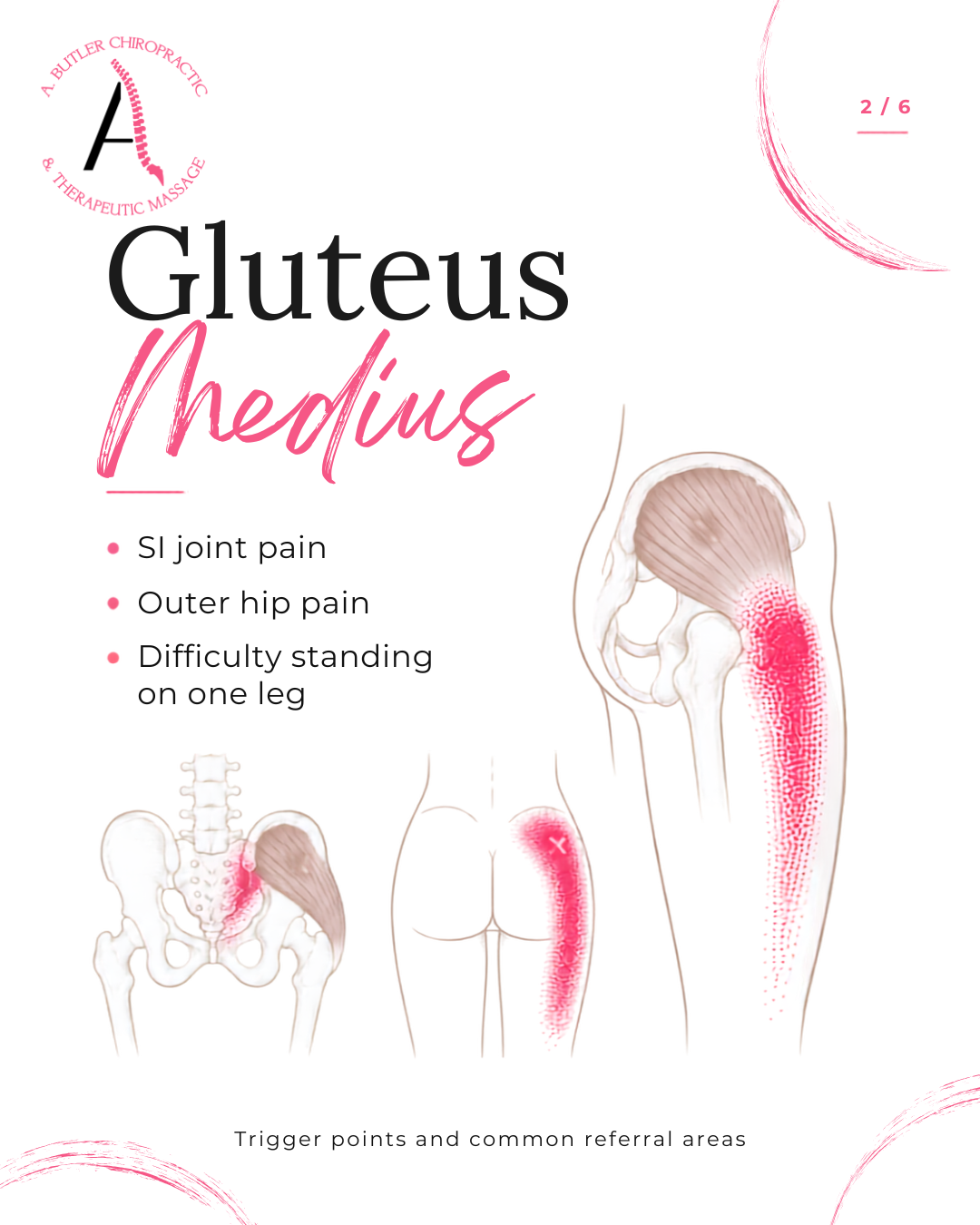
The gluteus medius sits along the outer portion of the hip. One of its main jobs is helping stabilize the pelvis while you walk, climb stairs, or stand on one leg.
Think about every step you take. For a moment, your body is balancing over one leg while the opposite leg moves forward. The gluteus medius helps keep the pelvis controlled during that transition.
It also works while you are standing with a child on one hip, carrying groceries, stepping over toys, or trying to put on pants without sitting down.
When the gluteus medius and its tendon become overloaded or irritated, you may notice:
Aching along the outer hip
Discomfort near the side of the pelvis
Pain when standing on one leg
Difficulty walking or climbing stairs
Tenderness when lying on the affected side
A feeling that the hip is tired, weak, or less stable
Outer hip pain involving the gluteus medius or minimus tendons is sometimes grouped under the term greater trochanteric pain syndrome, or GTPS. This condition commonly causes lateral hip, buttock, or thigh pain that becomes worse with activity or lying on the painful side.
The Gluteus Minimus: A Smaller Muscle With a Big Referral Pattern
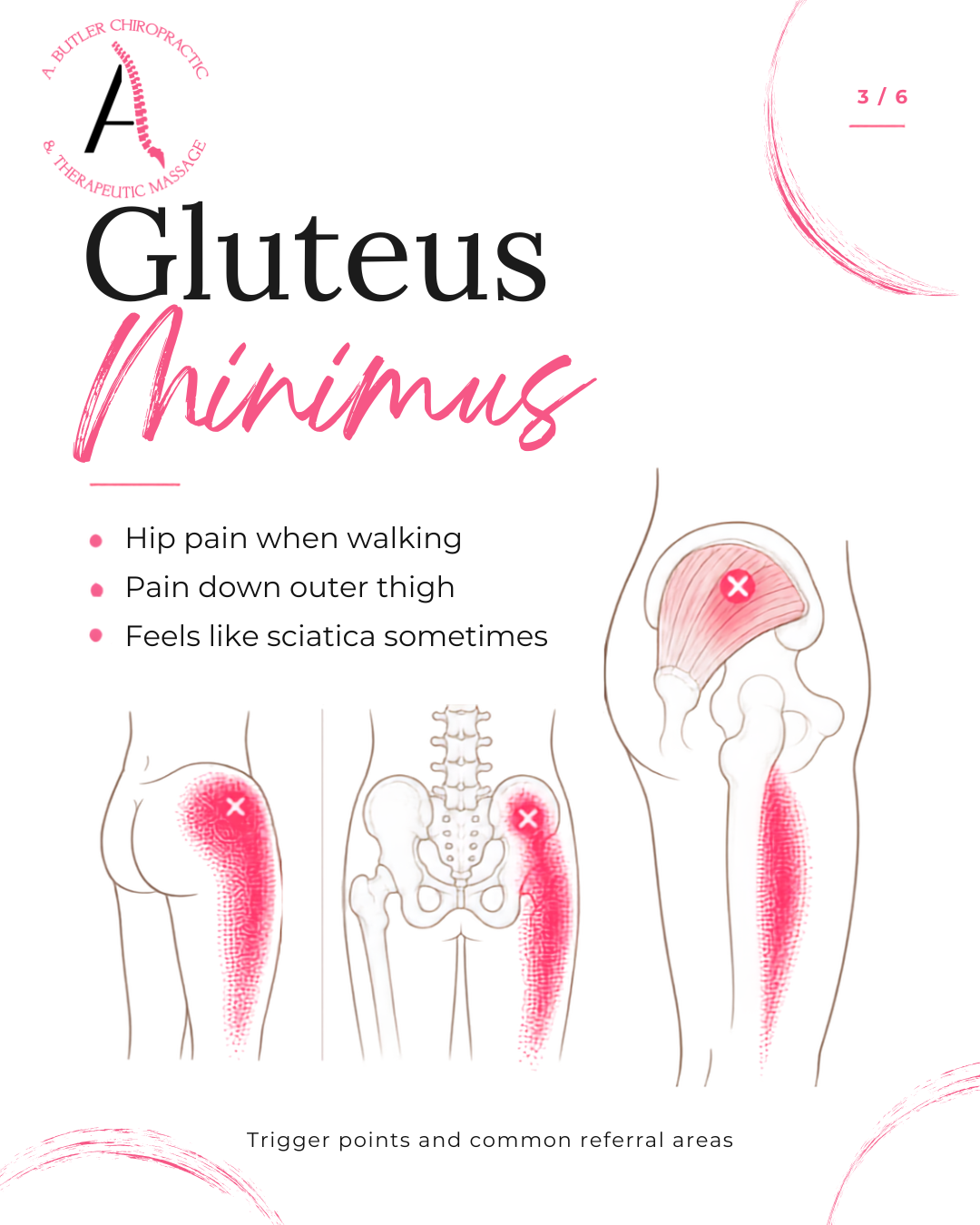
The gluteus minimus is located underneath the gluteus medius. It is smaller and deeper, but it still plays an important role in stabilizing the hip and controlling leg movement.
When this area becomes irritated, the discomfort may not remain directly over the muscle. Pain can spread through the side of the glute and along the outer thigh. In some cases, gluteus minimus referral patterns may resemble sciatica, which can make it difficult to tell whether the symptoms are primarily muscular or nerve-related without an examination.
You may notice discomfort while walking, standing for a long period, sleeping on that side, or shifting your weight from one leg to the other. The hip may feel achy one day and sharp or burning the next.
This changing pattern is part of what makes stubborn hip pain so frustrating. You may think it is improving, only to have it return after carrying a child through the grocery store or spending an afternoon standing at the kitchen counter.
The Piriformis: Deep Buttock Pain and Sciatic Nerve Irritation
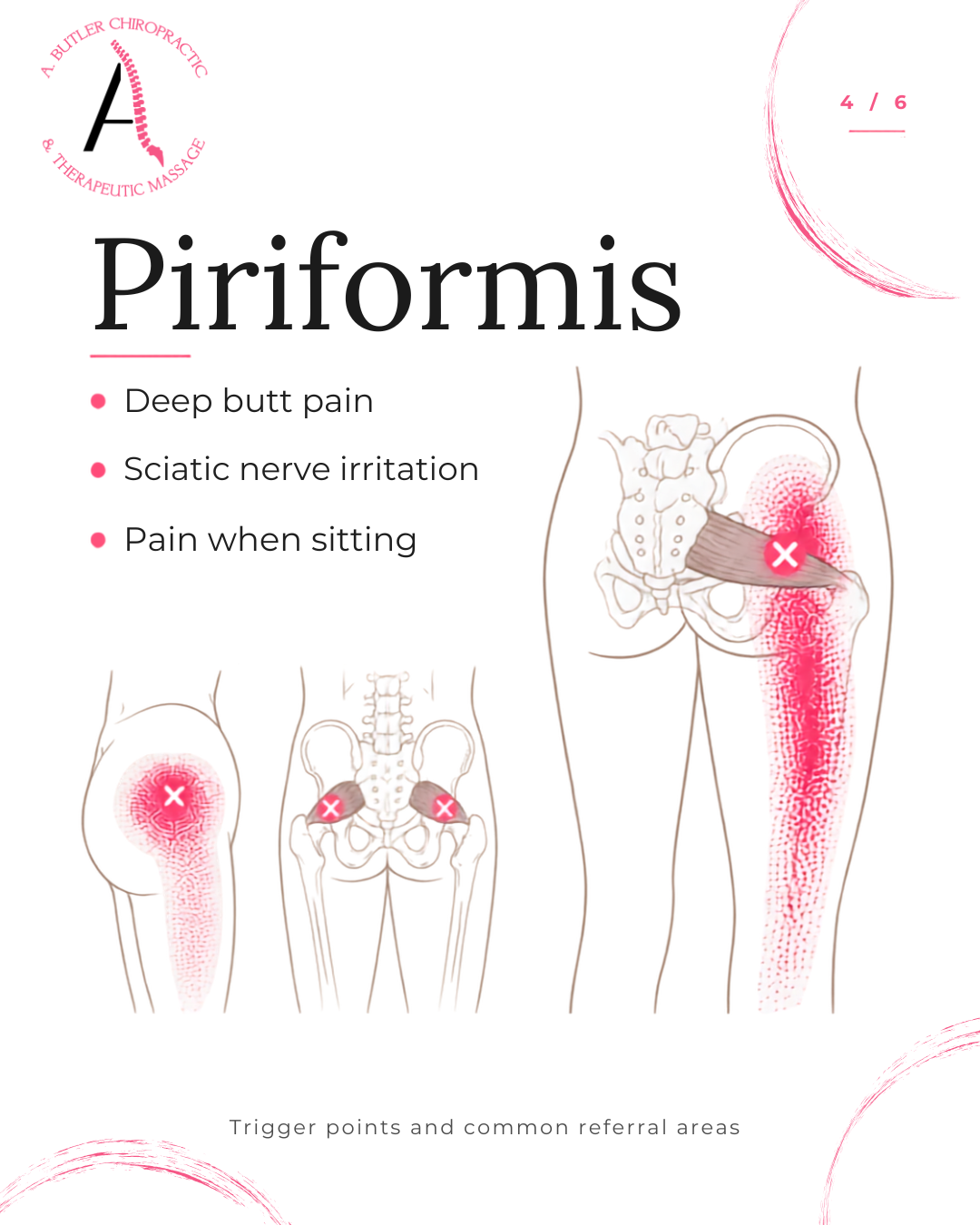
The piriformis is a small muscle located deep within the buttock. It helps rotate and stabilize the hip.
Because the piriformis sits close to the sciatic nerve, irritation in this deep gluteal region can sometimes contribute to buttock pain, discomfort while sitting, and symptoms that travel into the back of the thigh. Clinicians increasingly use the broader term deep gluteal syndrome when discussing sciatic nerve irritation outside the spine because several different tissues—not only the piriformis—may be involved.
Piriformis or deep gluteal discomfort may feel different from outer hip pain. It is often described as a deeper ache in the buttock that becomes more noticeable during prolonged sitting, driving, or certain hip movements.
That does not mean every deep ache is piriformis syndrome. Hip joint conditions, low-back problems, tendon irritation, sacroiliac joint discomfort, and several other issues can produce overlapping symptoms. A proper evaluation matters more than trying to match your pain to a picture online.
Why Everyday Habits Can Keep the Hip Irritated
Most cases of momma hip do not begin with one dramatic injury. Instead, the discomfort develops from small demands that repeat day after day.
Carrying a child on the same side is an obvious example, but it is not the only one. Long hours of sitting, crossing the legs, standing with the weight shifted onto one hip, sleeping directly on the sore side, climbing stairs, walking on uneven ground, and returning to activity too quickly after pregnancy or an injury can all affect how the area is loaded.
The body usually adapts well. That is what it is designed to do. Problems can begin when one area is repeatedly asked to compensate without enough variety, recovery, or support.
The muscles may tighten because they are working harder. The tendons may become sensitive to pressure. Movement through the pelvis, hip, or low back may become more restricted. Other muscles then change how they work to keep you moving.
Eventually, what started as a minor imbalance can become the hip you are constantly rubbing, stretching, or avoiding at night.
Why Side Sleeping Can Hurt So Much
One of the most common complaints with outer hip pain is difficulty sleeping on the affected side.
When you lie directly on a sensitive outer hip, the tissues near the greater trochanter are compressed between the mattress and the bone. If the gluteal tendons or nearby tissues are already irritated, that pressure may be enough to keep you awake.
Sleeping on the opposite side may not solve everything either. Without support between the knees, the top leg can drop across the body and place additional compression through the outer hip.
Placing one or two pillows between the thighs and knees may help keep the hips in a more neutral position. Load-management guidance for lateral hip pain also recommends limiting positions that place the hip in excessive inward angling, such as tightly crossing the legs.
A pillow can make you more comfortable, but it does not necessarily address why the hip became irritated in the first place.
How Therapeutic Massage May Help
Therapeutic massage is different from simply following the same relaxation routine for every person.
When someone comes in with outer hip, gluteal, or thigh pain, the massage therapist can evaluate where the body is guarding and which surrounding muscles may be working overtime. Treatment may include the gluteal muscles, deep hip rotators, low back, thighs, and other areas influencing movement through the pelvis.
The goal is not to dig into the most painful spot as aggressively as possible. In fact, irritated tendons and sensitive nerves do not always respond well to heavy pressure.
Instead, massage therapy may be used to:
Reduce protective muscle tension
Calm tender or overworked areas
Improve comfort during movement
Address compensating muscles around the hip and low back
Help the body relax out of a guarded pattern
At A. Butler Chiropractic & Therapeutic Massage, sessions are tailored to the person rather than copied from the previous appointment. The office’s approach combines individualized therapeutic massage with chiropractic and movement-based care when appropriate.
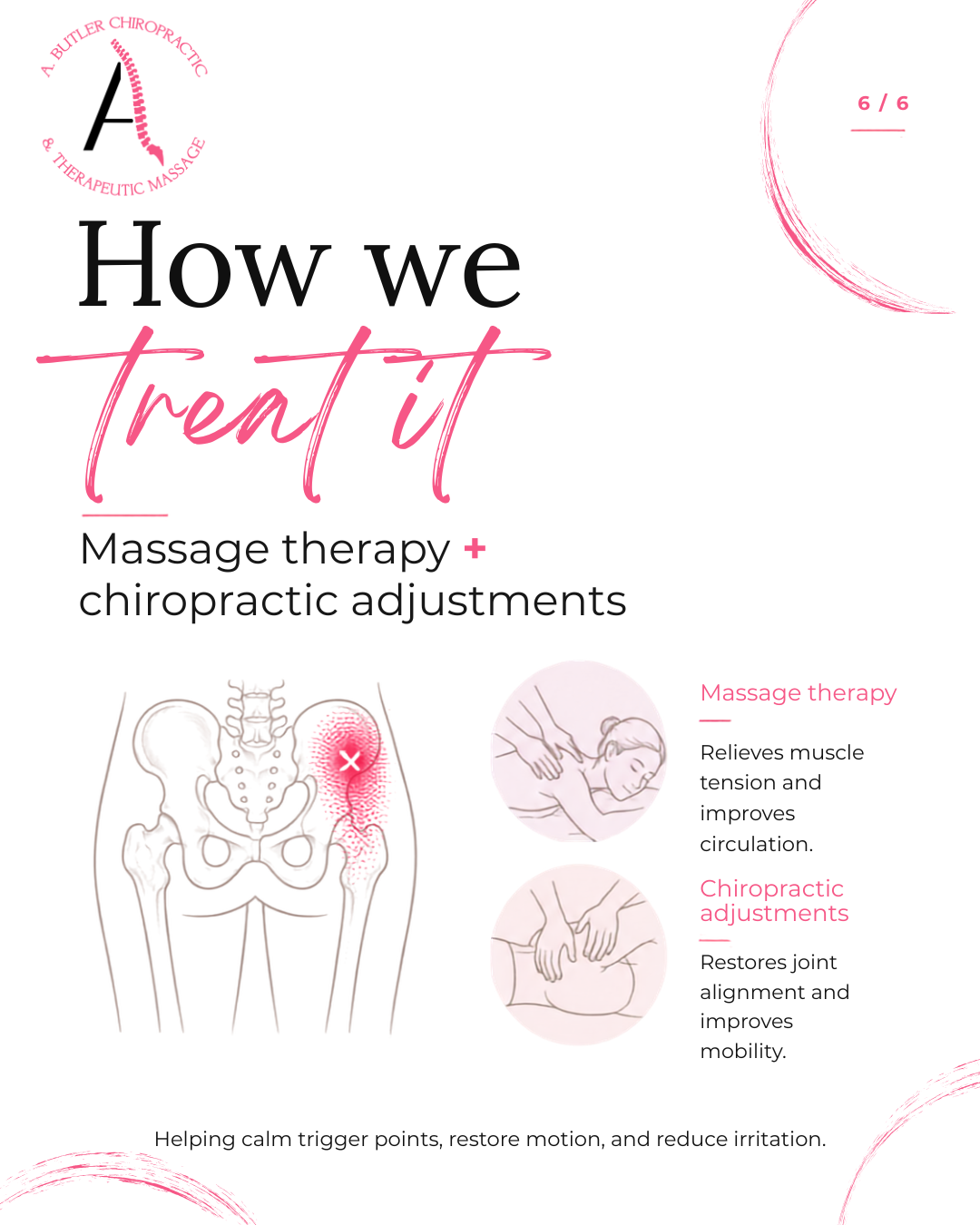
How Chiropractic Care May Support Hip and Pelvic Movement
Hip discomfort is not always isolated to the hip itself.
The pelvis, sacroiliac joints, low back, and hip joints all work together during standing and walking. When one area is not moving comfortably, another area may begin compensating.
Chiropractic care can include an evaluation of the low back, pelvis, hips, posture, muscle balance, and movement patterns. Care may involve gentle or traditional chiropractic adjustments, depending on the patient’s needs and comfort level, along with soft-tissue work and movement recommendations.
The purpose is not to assume that every hip is “out of place.” It is to understand how the joints and muscles are working together and determine whether limited movement or mechanical stress may be contributing to the symptoms.
Massage therapy can address the muscular side of the pattern, while chiropractic care can address joint movement and the way the surrounding areas are functioning. For some people, combining the two provides more complete support than focusing only on the muscle or only on the joint.
Passive care is only one part of a well-rounded plan. When gluteal tendons are involved, education, gradual load management, and appropriate strengthening are considered important parts of recovery. Research on gluteal tendinopathy has found meaningful benefits from education and exercise-based care.
A Few Changes You Can Make During the Day
You do not have to completely rebuild your routine overnight. Small changes can give an irritated hip a break from the same repeated stress.
Start by noticing how often you hang your weight on one hip. Try standing with your weight more evenly distributed, especially while cooking, brushing your teeth, or talking at the counter.
Switch the side you use to carry children, grandchildren, bags, and laundry whenever it is practical. Better yet, hold heavier loads closer to the center of your body rather than letting the pelvis shift far to one side.
Avoid sitting for long stretches without changing positions. Gentle movement breaks can help prevent the hip and gluteal muscles from stiffening.
Be cautious with aggressive stretching. Stretching may feel helpful when a muscle is simply tight, but certain deep stretches can increase compression on an already sensitive outer-hip tendon. More stretching is not always the answer.
Finally, pay attention to your sleeping setup. A supportive pillow between the legs may reduce some of the pressure that builds overnight.
When Hip or Leg Pain Needs More Immediate Attention
Most nagging hip and gluteal discomfort is musculoskeletal, but new or rapidly changing symptoms should not be ignored.
Seek prompt medical evaluation after a significant fall or injury, if you cannot bear weight, or if the area becomes suddenly swollen, hot, or accompanied by a fever.
Emergency care is important when back, buttock, or leg pain occurs with severe or worsening weakness in both legs, numbness around the genitals or buttocks, or new difficulty controlling the bladder or bowels. These can be warning signs of a rare but serious nerve problem.
Frequently Asked Questions About Momma Hip
Can the gluteus medius or gluteus minimus cause pain that feels like sciatica?
Pain from the gluteal muscles and tendons can spread through the buttock and outer thigh, creating a pattern that resembles sciatica. True sciatica involves irritation of the sciatic nerve or its nerve roots, so an examination is helpful when pain travels down the leg or includes tingling, numbness, or weakness.
Why does my outer hip hurt when I sleep on it?
Side sleeping places direct pressure on the outer hip. When the gluteal tendons or nearby tissues are already sensitive, that compression can increase discomfort. Supporting the legs with pillows may help reduce pressure, but recurring pain still deserves an evaluation.
Why does my hip hurt when I stand on one leg?
Standing on one leg increases the demand placed on the gluteus medius and minimus. Pain or difficulty during this movement can occur when the outer-hip muscles or tendons are irritated, but it is not enough by itself to diagnose a specific condition.
Can massage therapy and chiropractic care help with momma hip?
They may help when muscle tension, joint restriction, or movement compensation is contributing to the problem. The most appropriate plan depends on whether the symptoms are coming from the muscles, tendons, hip joint, pelvis, low back, nerves, or a combination of areas.
Your Hip Does Not Have to Keep Nagging You
It is easy to dismiss hip pain as part of being a busy mom, an active grandma, or simply getting older. But discomfort that keeps affecting your walking, sitting, sleep, or daily routine is worth paying attention to.
Sometimes the solution begins with the muscles. Sometimes the joints need support. Often, the most helpful approach is looking at how the entire hip, pelvis, and low back are working together.
At A. Butler Chiropractic & Therapeutic Massage, we provide chiropractic care and therapeutic massage for individuals and families throughout Butler, Lyndora, and the surrounding Butler County communities. Our office is located in Lyndora, Pennsylvania, just outside Butler.
Call 724-822-1828 or book online to schedule an appointment and begin figuring out what is contributing to your stubborn hip, gluteal, or thigh pain.