

By Dr. Amber Butler, A. Butler Chiropractic
Sometimes the first sign of a stiff neck shows up in the school pickup line. Your child calls “Mom, look!” from the back seat, and you turn your whole upper body to see what they’re holding. Somewhere between looking straight ahead and looking over your shoulder, your neck decided that was far enough.
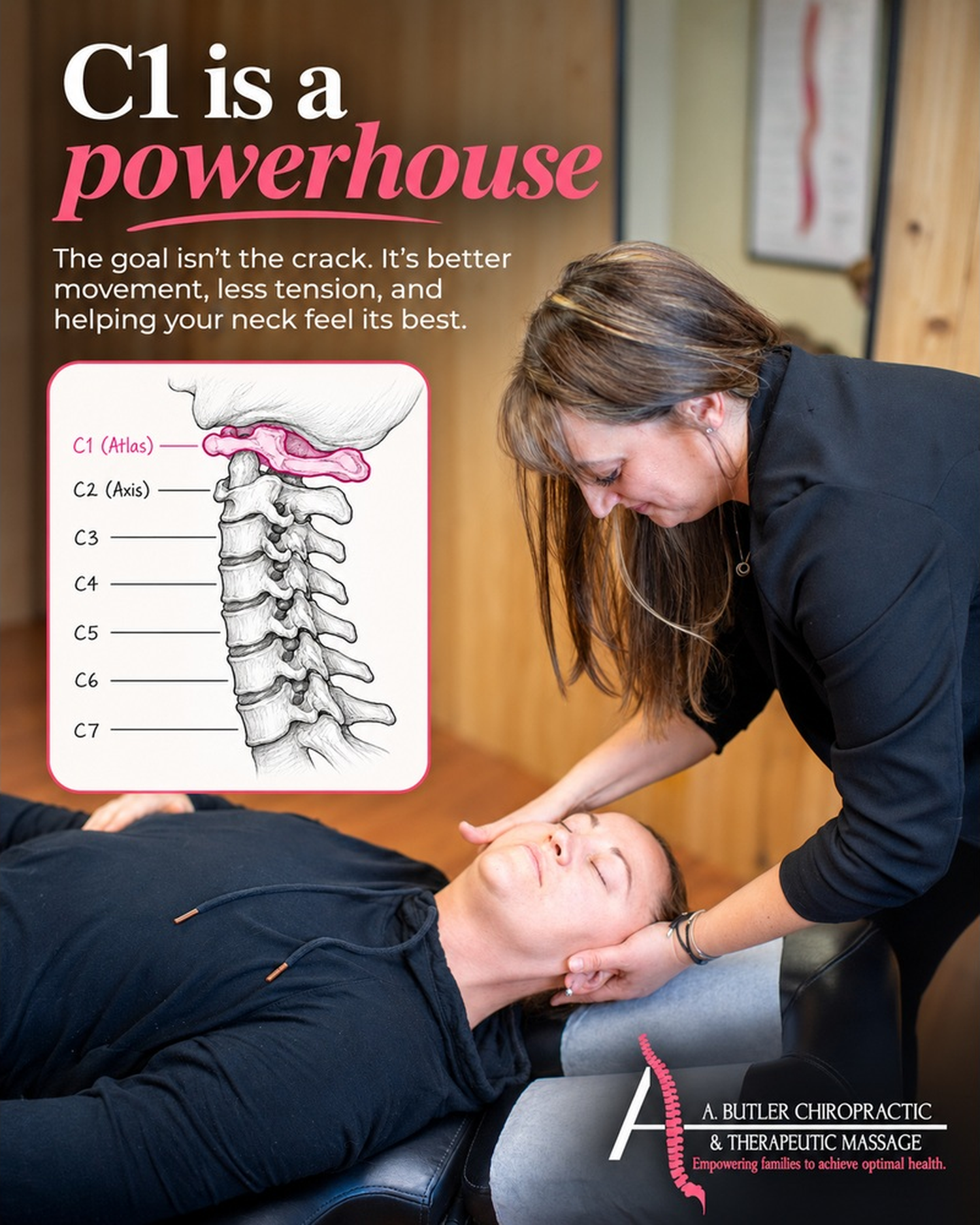
When someone describes that feeling in our office, one of the places I consider is the very top of the neck. Your first cervical vertebra, called C1 or the atlas, sits directly underneath your skull. It helps support your head and works with the bone below it to let you turn from side to side. For such a small part of your spine, it’s a bit of a powerhouse.
What does the C1 vertebra do?
Think about the difference between nodding yes and shaking your head no. When you give a small nod, much of that motion happens where your skull meets C1. When you turn your head to say no, C1 pivots around part of the second neck vertebra, called C2 or the axis. The rest of your neck contributes, too. Together, those movements let you follow a conversation around the dinner table without having to turn your chair.
There are also small muscles tucked beneath the base of your skull called the suboccipitals. They help control those fine movements. If you point to the tender spot right where your head meets your neck, you’ve given me a good place to start looking. Figuring out what’s bothering you takes a little more conversation and an exam.
Can upper neck pain cause a headache?
Yes. A headache that comes from a problem in the neck is called a cervicogenic headache. One possible pattern is an ache that starts near the base of the skull and travels forward on one side. Another clue is when turning your head brings on your familiar headache and you notice that your neck doesn’t turn as far in that direction.
Sometimes the spot you point to is a little surprising. You might feel a deep ache just behind one ear, especially when you turn to talk to the person beside you. Pain from the joint where your skull meets C1 can also travel up toward the crown of your head or, occasionally, into your temple. These are useful details to mention at your visit, though the location of the ache alone can’t tell us whether C1 is out of alignment.
Here’s a detail I’d want to hear at your visit. Does the headache begin after your neck has been bothering you for a while? Or do you notice the neck soreness once the headache is already underway? Migraine can come with neck discomfort, too. The order things happen in, what the pain feels like, and whether this headache is familiar all help us decide what deserves a closer look. A sudden, severe headache that reaches full intensity within seconds or minutes needs emergency care.
What we look for when turning your head feels difficult
You don’t need to walk into our office knowing which vertebra hurts. “I can look over my left shoulder, but checking my right blind spot hurts” tells me more about your day than a guess about C1 ever could. So does “I’m comfortable feeding the baby, but when I lift my head afterward, the base of my skull aches.”
We start with what changed for you. Then we look at how comfortably you can move, whether a particular motion reproduces the feeling, and how the muscles around your neck and shoulders respond. If chiropractic care fits what we find, we can discuss an adjustment, focused soft-tissue work, or a combination. If your symptoms need another kind of evaluation, we’ll talk through that with you.
Can I have gentle neck care without a manual adjustment?
Absolutely. If the thought of someone turning your neck quickly makes your shoulders creep toward your ears, tell us. You can say, “I’d like help with my neck, and I’d prefer to skip a manual neck adjustment.” That’s enough. We can explain our gentle hands-on and instrument-assisted options, show you how we’d position you, and give you time to decide what feels comfortable.
And what about that ahhh, there it is feeling after an adjustment? I understand the appeal. But the part I’m interested in comes when you sit up and try that same movement again. Can you look a little farther over your shoulder? Does the familiar pulling feel easier? Those are things we can check together, whether you heard a pop or the room stayed perfectly quiet.
If neck stiffness or a recurring headache is getting in the way of everyday things, we’d like to hear what that looks like for you. To schedule a visit at A. Butler Chiropractic in Lyndora, PA, call 724-822-1828 or book online.