
Lower Cross Syndrome: Why Sitting Too Much Can Lead to Low Back Pain, Hip Tightness, and Poor Posture
Sometimes it helps to finally have a name for what you’ve been feeling.
If you’ve been dealing with low back pain, hip tightness, poor posture, or that achy, tired feeling after standing or walking too long, Lower Cross Syndrome may be part of the reason why.
A lot of people have never heard of it before. But once you understand what it is, many of your symptoms start to make a whole lot more sense.
What Is Lower Cross Syndrome?
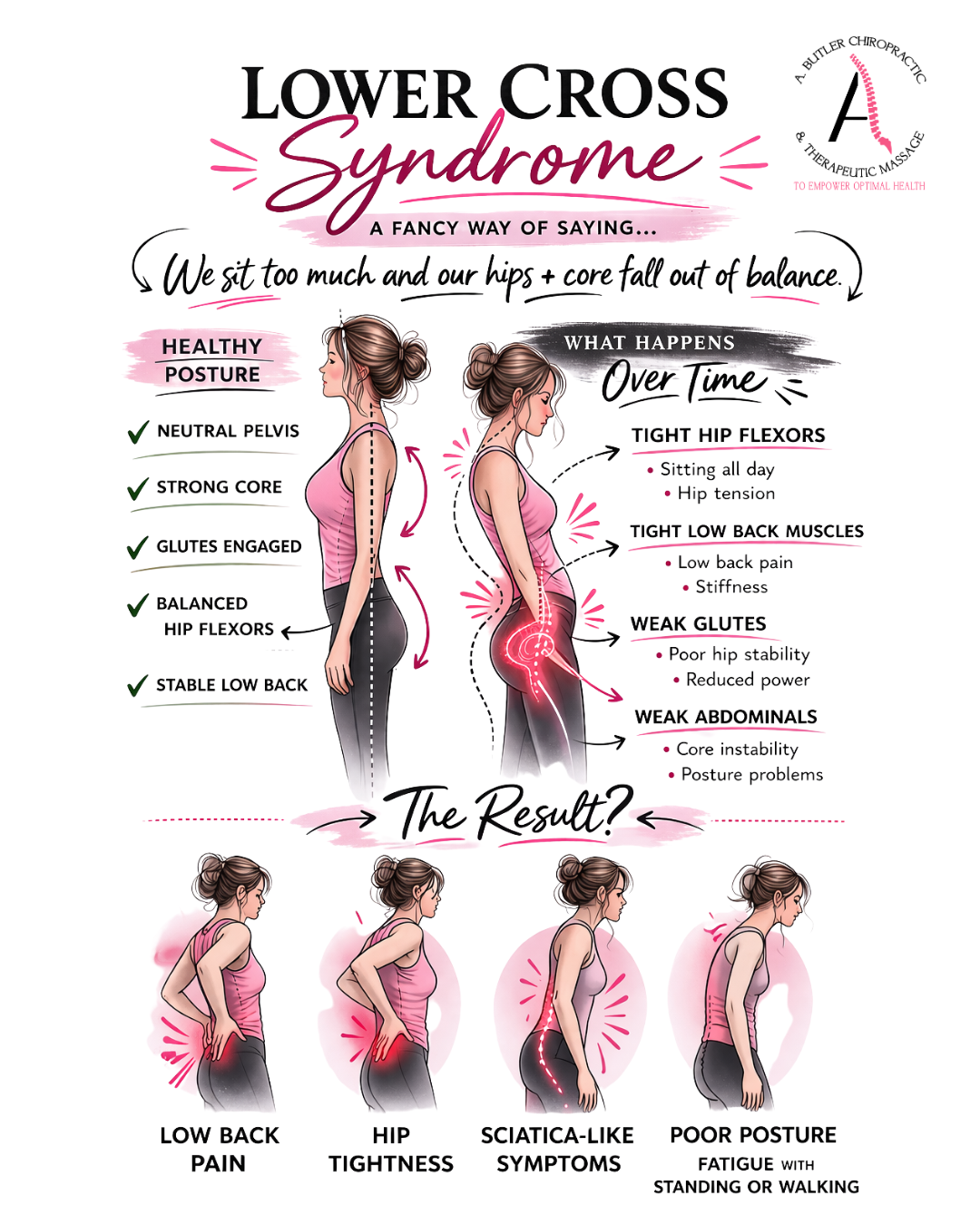
Lower Cross Syndrome is a common muscle imbalance pattern that affects the pelvis, hips, core, and low back.
Over time, some muscles get tight and overactive, while others become weak and underactive.
We typically see:
Tight hip flexors
Tight low back muscles
Weak glutes
Weak core muscles
When those muscles stop working together the way they should, the pelvis can shift out of a more neutral position. That creates more stress on the low back, hips, and pelvis and can make everyday movement feel harder than it should.
Why Lower Cross Syndrome Happens
Honestly? Because this is how most of us live.
Think about how much we sit in a day:
Working
Driving
Watching practices
Feeding babies
Relaxing on the couch
Sitting is not bad. But when we spend hours in the same position day after day, the body starts to adapt.
Hip flexors tighten.
Glutes become less active.
Core muscles stop supporting the body as well.
Low back muscles start doing more than they were meant to do.
Over time, that imbalance can build into a pattern that affects posture, movement, stability, and comfort.
Common Symptoms of Lower Cross Syndrome
Lower Cross Syndrome can show up in ways that feel very familiar to a lot of people.
Some of the most common symptoms include:
Low back pain
Hip tightness
Poor posture
Core instability
Weak glutes
Stiffness through the low back and pelvis
Fatigue with standing or walking
Sciatica-like symptoms
Some people feel like they are always tight. Others notice they cannot stand comfortably for long periods without their back or hips starting to ache. And for many, posture starts to feel harder and harder to maintain.
Why Muscle Imbalance Creates Pain
Your body is always trying to adapt and keep you moving.
So when one area becomes tight or weak, another area starts compensating.
That compensation can look like:
Tight hip flexors pulling the pelvis forward
Tight low back muscles increasing stiffness and stress
Weak glutes reducing hip stability and power
Weak abdominal muscles making the core feel less supportive
When that happens, the low back and hips often take on more stress than they should. Everyday movement becomes less efficient, and the body starts working harder just to do normal things.
That is when people start noticing pain, tension, fatigue, and posture changes.
The Good News
The good news is that Lower Cross Syndrome is something we can work on.
When we improve joint motion and support better muscle balance, the body can start functioning the way it was designed to.
That can mean:
Less low back pain
Better posture
Improved hip mobility
Stronger core and glutes
Less tension through the pelvis and spine
Better movement overall
And that matters, because when the body moves better, everything feels better.
How Chiropractic Care Can Help Lower Cross Syndrome
In our office, we do not just look at where it hurts. We look at how your body is moving, where it is compensating, and what patterns may be keeping you stuck.
Care for Lower Cross Syndrome may include:
Chiropractic adjustments to improve joint motion
Targeted muscle work to reduce tension
Posture restoration strategies
Movement recommendations to improve balance and stability
The goal is not just temporary relief.
The goal is to help your body move better, feel stronger, and stop falling back into the same stress pattern over and over again.
When to Get Help
If you have been dealing with:
Ongoing low back pain
Tight hips that never seem to loosen up
Poor posture
Weakness through the core or glutes
Achiness when standing or walking
…it may be time to look at the bigger picture.
Sometimes the issue is not just pain. Sometimes it is a movement pattern that has been building for a long time.
And when we address the pattern, not just the symptom, real change can happen.
Final Thoughts
If this sounds like you, your body is not broken. It is adapting.
Lower Cross Syndrome is one of those patterns that can explain a lot, and with the right support, it is absolutely something we can work on.
If you are dealing with low back pain, hip tightness, poor posture, or that tired, achy feeling after being on your feet too long, we would love to help.
Call us at 724-822-1828 or book online HERE.
Because when the body moves better, everything feels better.