

Health and Wellness Is a Journey, Not a Perfection Contest
You can drink your water, eat a decent lunch, get outside for a walk, and still finish the day with sore shoulders and very little patience left. You can have every intention of going to bed earlier, only to end up changing sheets at midnight because somebody has a stomach bug.
Life does not organize itself around our wellness plans. Especially when you are the person keeping everyone else's life organized.
At A. Butler Chiropractic, we understand that. We are not expecting you to show up with a perfect routine, a spotless food log, or proof that you did every exercise we discussed. We want to know how you are actually doing and what would help you move forward.
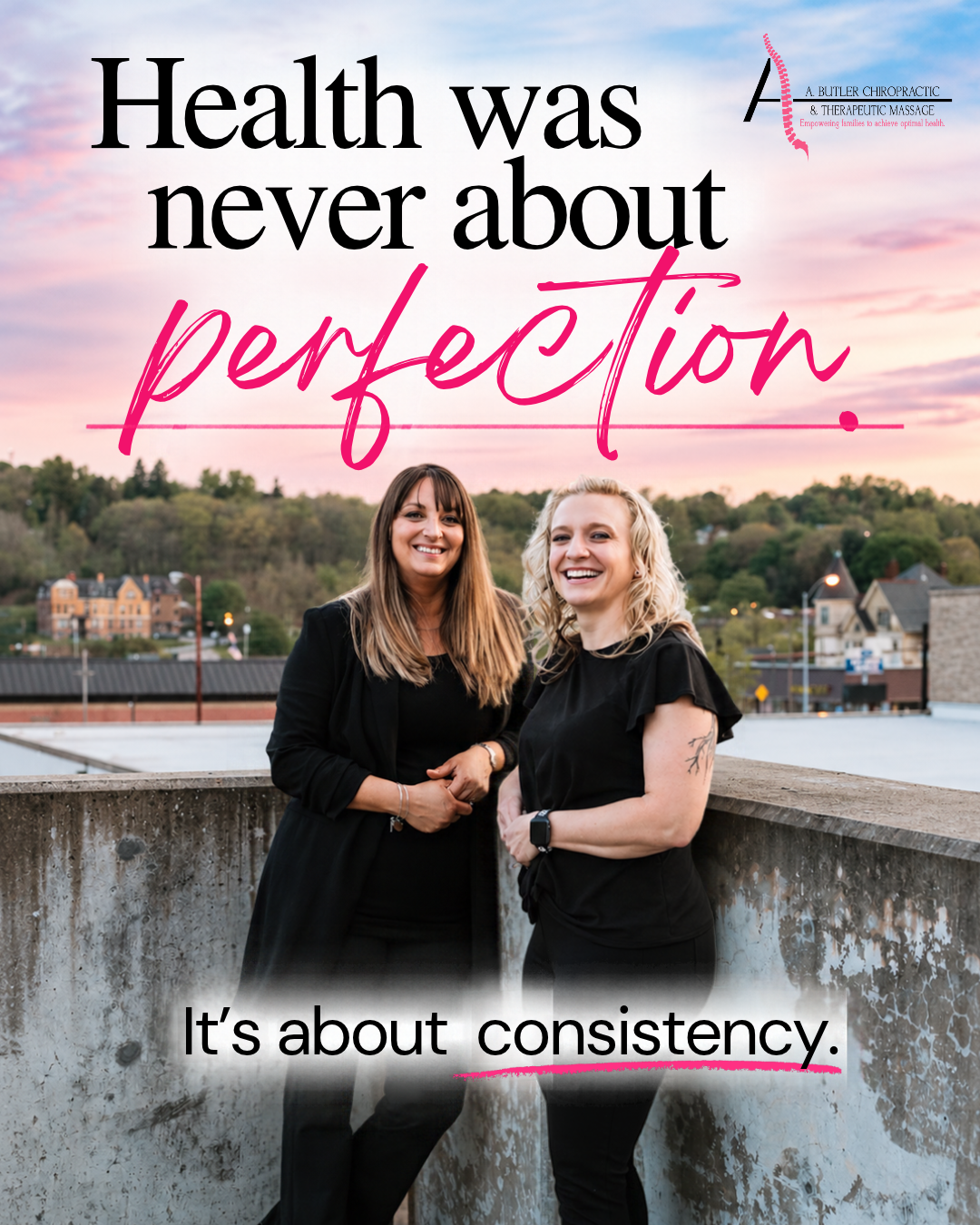
Health and wellness is a journey built on small, sustainable changes. It is about what you return to consistently, not whether you get everything right every day.
Why perfection makes taking care of yourself harder
It is easy to turn wellness into another job you feel behind on. Between advice about exercise, meals, sleep, supplements, and stress, taking care of yourself can start to feel like it requires a second calendar.
Then you miss a workout. Dinner comes from the drive-through. The week goes sideways, and suddenly you feel like you have ruined the whole plan.
But a missed walk does not erase the walks you already took. An unpredictable week does not mean you are incapable of building healthy habits. It means your plan needs room for the life you actually have.
If your version of wellness only works when the kids are healthy, work is quiet, and nobody needs anything from you, it probably needs a little adjusting. Around here, we would rather help you find something realistic than give you one more thing to feel guilty about.
What does an 80% approach to wellness mean?
Think of 80% consistency as permission to aim for a dependable pattern while leaving room for being human. Choose helpful habits you can follow most of the time, roughly four out of five planned opportunities, instead of expecting a perfect streak.
That might mean taking your planned walk on four workdays, even though the fifth gets swallowed by appointments. It might mean eating regular, satisfying meals most days without turning a birthday dinner into something you need to make up for.
Eighty percent is a flexible mindset, not a scientifically established cutoff for health benefits. There is no magic percentage that guarantees results, and it is not a rule for skipping prescribed medication or medical instructions.
It is also not another test to fail. Some seasons will fall well below that target. You still deserve support, and the helpful things you manage to do still count.
The bigger question is: can you keep returning to this habit over time? That is where small changes have a chance to become part of your life.
Small changes work best when they fit your real day
“Take better care of myself” is a lovely intention, but it does not tell you what to do between school pickup and dinner.
A more useful starting point is one specific action connected to something you already do. Put your walking shoes beside the door you use after work. Keep an easy lunch option available before the week gets busy. Set aside a few minutes for the home exercises your provider recommended at a time you can realistically remember.
The National Institutes of Health recommends small, reasonable goals and arranging your surroundings to make healthy choices easier. You do not have to rely on feeling motivated every single day.
Start with one change that solves an actual problem. If you regularly skip lunch and feel drained by the afternoon, begin there. If you sit for hours without moving, start with a brief movement break. If your evening scroll keeps stretching past bedtime, choose a stopping point that gives you a little more opportunity to rest.
Once that change feels manageable, build on it. Your starting point does not have to become your permanent ceiling.
A short walk still counts
One of the most helpful things to let go of is the idea that movement only matters if it looks like a full workout.
A ten-minute walk is movement. A shorter version of your usual exercise session can keep you connected to a routine when time is tight. You can build gradually from what your body and schedule allow.
A common recommendation for adults is at least 150 minutes of moderate-intensity activity per week for adults, along with muscle-strengthening activity on two days. It also emphasizes that some activity is better than none and that activity can be spread throughout the week.
You do not have to treat that recommendation as an all-or-nothing entrance requirement. A manageable starting point gives you somewhere to go.
For a busy mom, that might be a walk while a child is at practice. For someone returning to exercise, it might be a shorter session adapted to their current ability. The goal is to find movement you can repeat and progress appropriately, not punish yourself for what you cannot fit in today.
Feeling lousy does not mean you did wellness wrong
This matters because we see women who are trying hard and still wonder what they are missing.
You may be making helpful choices and still have pain, fatigue, or a difficult week. Healthy habits do not give anyone complete control over stress, illness, hormonal changes, or the demands of caregiving.
Your body is not a report card on how well you followed the rules.
Sometimes the next step is changing the plan. Sometimes it is asking for help at home. Sometimes it is getting a symptom evaluated instead of assuming you need more discipline. Ongoing pain or exhaustion deserves attention, not a lecture about trying harder.
Wellness should help you respond to your needs, including recognizing when everyday self-care is not enough.
Your wellness needs can change with you
Think about the version of you from five or ten years ago. Was she sleeping differently? Working a different schedule? Carrying a baby instead of sitting in the bleachers? Caring for young children instead of aging parents?
The foundation may be familiar, but your daily demands can change considerably.
A routine that worked before pregnancy may need to look different postpartum. A woman navigating perimenopause may need to revisit what is interfering with rest or making activity uncomfortable. Someone returning to exercise after an injury may need a gradual plan instead of jumping straight back into an old routine.
Adapting is part of consistency. You are finding a way to continue caring for the person you are today.
We want your care to reflect that, too. What helped you several years ago is useful history, but we also need to listen to what is happening now.
Where chiropractic and massage fit into the journey
Our goal is bigger than asking whether you walked in with pain and walked out with less of it. We want to understand what you need your body to do and what is getting in the way.
Maybe you want to sit through the workday more comfortably. Maybe you want to get on the floor with your grandchildren. Maybe your shoulders are tired of being responsible for the baby, the bags, and apparently the entire household.
We look at your movement, the joints involved, and the muscles around them. We don't ignore the muscles. Depending on your assessment, care may include chiropractic treatment, muscle work, appropriate home exercises, or a recommendation for another type of care.
Chiropractic treatment and massage can be part of managing certain musculoskeletal symptoms. For example, spinal manipulation may offer small improvements in pain and function for some people with chronic low-back pain. That does not mean everyone needs the same treatment or an ongoing appointment schedule.
Our massage therapists also adapt sessions to your comfort, goals, and how you feel that day. When appropriate, they can collaborate with our chiropractors. You can book massage as a standalone service, too.
Appointments are one possible part of your wellness plan. Daily movement, rest, nutrition, and other healthcare still matter. Together, we can discuss what is useful, whether it is helping, and what needs to change.
Notice progress in the life you are living
Progress does not always announce itself with a dramatic before-and-after moment.
Sometimes you notice that you are taking movement breaks without needing a reminder. You have stopped skipping lunch so often. You are making time for the exercises you were given. Or you recognize that your routine is slipping and adjust it before deciding to give up completely.
You may also notice changes in comfort or what you can do. Those changes are worth discussing with your provider, just as a lack of improvement is worth discussing.
Ask yourself: What is becoming easier? What still needs attention? Is this plan helping me participate in the things I care about?
Those answers are more useful than a perfect streak on a calendar.
Start with one thing you can return to this week
You do not need a complete life overhaul by Monday. Pick one realistic action, decide when it fits, and give yourself a smaller version for the days that do not go as planned.
If you miss it, return at the next reasonable opportunity. You do not have to wait for another week, another month, or a less complicated season of life.
At A. Butler Chiropractic in Lyndora, PA, we support women and families throughout Butler and Butler County with care that considers the person behind the symptoms.
You can come in because something hurts. You can come in to discuss how your needs have changed. You can tell us you have been struggling to keep up. We can start with where you are.
You do not have to have it all together to take care of yourself.
Call 724-822-1828 or book online HERE to schedule an appointment.